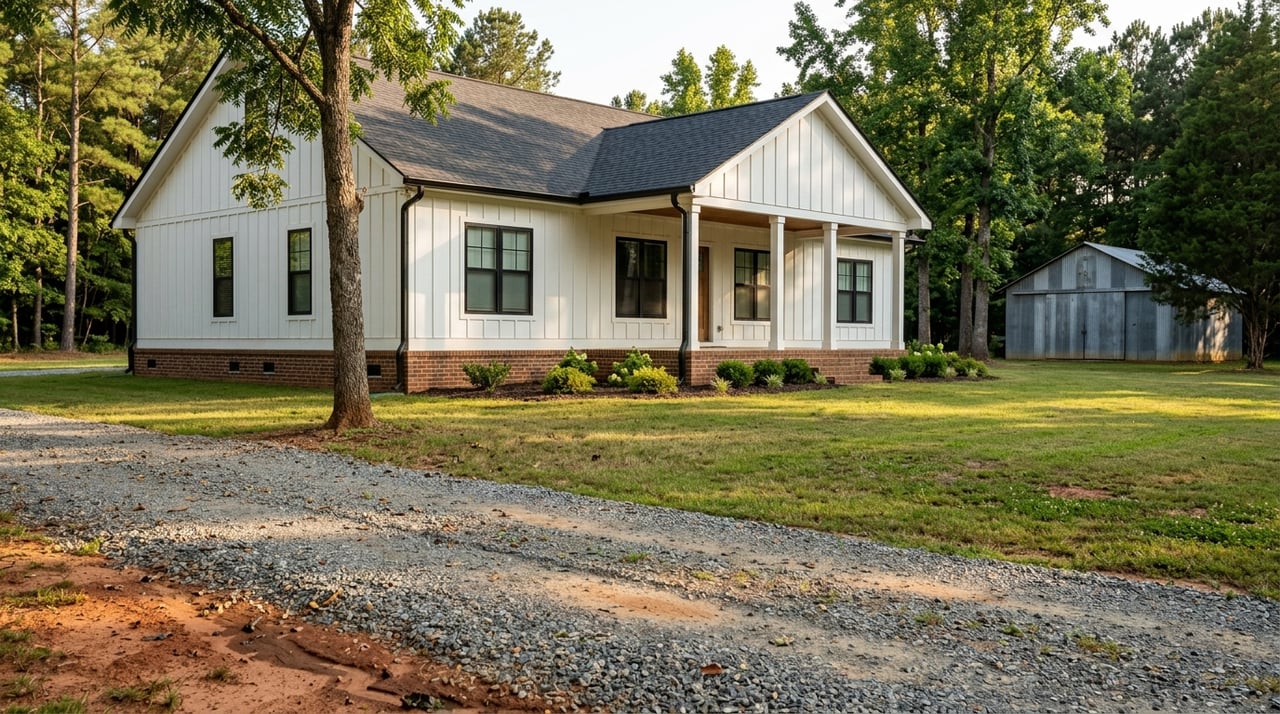
If you market a small farm or piece of land around Ashville like a typical house listing, you may leave buyers with more questions than answers. Acreage buyers want to know how the land works, how it is accessed, what it may support, and what paperwork backs it up. If you are getting ready to sell in Ashville or the surrounding St. Clair County area, this guide will show you what matters most and how to present your property in a way that builds buyer confidence. Let’s dive in.
Why Ashville land needs a different approach
Small farms, homesteads, and vacant acreage are not judged the same way as a home in a subdivision. Buyers are often looking past the surface to understand road access, floodplain status, utility options, boundaries, and possible land use.
That matters even more around Ashville because St. Clair County says unincorporated parts of the county do not have zoning rules or a building-permit requirement. In practical terms, that means your listing needs to explain the property clearly instead of relying on simple zoning labels to tell the story.
Start with the facts buyers need
When someone shops for land, they are trying to answer a basic question: Will this property work for my plans? Your marketing should make that easier to understand from the start.
A strong Ashville-area land listing should clearly show:
- Legal access to the property
- Whether the road is public or private
- Parcel shape and approximate boundaries
- Topography, drainage, and water features
- Floodplain status
- Utility availability or feasibility
- Existing survey, plat, or legal description
- Easements or right-of-way documents
- Current-use tax status, if applicable
This kind of detail helps serious buyers move faster. It also helps reduce the back-and-forth that can stall interest early.
Access is one of the first selling points
For small farms and rural land, access is not a side note. It is one of the first things buyers and lenders want to confirm.
If the property uses a private drive, say so clearly. St. Clair County’s E-911 information notes that a private drive can be named in some cases, but that does not mean the county maintains it. That distinction matters for buyers who are planning a homesite, farm use, or future division of the property.
You should also be ready to explain frontage, gates, shared access points, and any recorded easements. If access is simple and documented, that can become a real marketing strength.
Maps and aerials do a lot of the heavy lifting
Ground photos matter, but they are not enough for land. Buyers need to see how the tract lays out, where it sits, and what surrounds it.
St. Clair County offers GIS tools and a public parcel viewer with parcel information, contours, and named water features. Those tools can help create visuals that show road frontage, boundary shape, nearby creeks, and terrain changes in a way buyers can understand quickly.
For many Ashville-area listings, the most helpful visual package includes:
- Professional exterior and land photos
- Labeled aerial images
- Parcel boundary overlays
- Plat or survey images, if available
- Map views showing roads, water features, and contours
This matters because online presentation influences how buyers discover and evaluate property. In the 2024 buyer survey from NAR, 43 percent of buyers started by searching the internet, 51 percent found the home through online search, 41 percent said photos were very useful, and 39 percent valued detailed property information.
Boundaries and surveys help buyers trust the listing
Land buyers tend to be careful about boundaries, and for good reason. A tax map may help with a general picture, but it should not be treated like a final answer.
Research in the report notes that tax maps can be inaccurate and recommends getting a survey, walking the boundaries, and clarifying any unclear property-line references. If you already have a recent survey or plat, that can make your listing much stronger.
If you do not have a survey, it is still smart to gather the legal description, parcel ID, deed information, and any known easement documents before your property hits the market. The more complete your file is, the easier it is for a buyer to take the next step.
Show what the land can support
A pretty view helps, but land buyers usually want more than that. They want to understand whether the property fits their intended use.
That is why soil and site information can add real value to your marketing. The research report points out that soil surveys help people evaluate land suitability, while buyers also often review topography, water supply, utilities, restrictions, internet and cell service, and wastewater feasibility.
For a small farm or homestead listing, helpful talking points may include:
- Pasture, farmland, or timber use history
- Soil information, if available
- Water features on or near the property
- Power availability
- Water source options
- Septic or wastewater feasibility
- Internet or cell access
- Conservation or land-management notes
These details help buyers picture real use instead of guessing from photos alone.
Floodplain details should be clear
Floodplain status can affect both buyer interest and financing. In St. Clair County, floodplain maps can be reviewed by appointment, and while the county does not require flood insurance, a lender may require it.
The county also says new structures in the flood plain must comply with the local flood damage prevention ordinance. If any part of your tract is in or near a mapped flood area, your marketing should explain that carefully and factually.
Clear floodplain information does not always hurt a listing. What hurts more often is vague information that causes buyers to worry about surprises.
Current-use tax status can be a major selling point
If your Ashville-area property qualifies for current-use treatment, that may be an important point to include in the listing package. Alabama says eligible Class III agricultural and forest property is assessed at 10 percent, and current-use valuation is based on the property’s actual use rather than a speculative higher use.
St. Clair County’s FAQ says five acres or more of qualifying farmland, pastureland, or timberland may apply. The state also says a new owner must reapply after a sale if they want the tax treatment to continue.
Because timing matters, sellers should verify deadlines with the county office. The county FAQ says applications should be filed by Dec. 31 for the next tax year, while the Alabama Department of Revenue says applications are accepted between Oct. 1 and Jan. 1.
Development potential should be described carefully
Some acreage buyers want a homesite now. Others want flexibility later. If your tract may be split, improved, or marketed as a future homesite, your listing should explain what is known and avoid broad assumptions.
St. Clair County’s subdivision rules require a preliminary plot, legal description, road and drainage details, and county-engineer review before road construction begins. That means future development potential should be framed around actual documentation and local process, not vague promises.
In other words, it is better to say a property has road frontage, legal access, and supporting documents available than to overstate what a buyer can do without further review.
Your seller prep can shape your final price
Well-prepared land listings tend to create better conversations with better buyers. When the facts are organized up front, you reduce uncertainty and help buyers feel more comfortable making an offer.
Before listing small farms or land around Ashville, gather as many of these items as possible:
- Deed and legal description
- Parcel ID
- Current survey or plat
- Easements and right-of-way documents
- Current-use paperwork
- Floodplain notes or map details
- Utility information
- Septic or wastewater details
- Soil, timber, or production notes
- Road and drainage documents, if the tract may be improved or divided
This is one area where local, hands-on marketing makes a difference. A complete package helps your property look more credible online and easier to evaluate in person.
Professional marketing still matters for land
Even the most documentation-heavy listing still needs strong exposure. Buyers are often searching across a wider area for small farms and acreage, so a sign alone rarely does enough.
That is where a professional marketing approach helps. Clear listing copy, strong photos, map-based visuals, MLS-grade presentation, and broad online distribution can help your property reach buyers who are actively comparing land options across North Alabama.
For Ashville acreage, the best marketing usually blends two things: solid visuals and solid proof. When buyers can see the property and understand the paperwork, they are more likely to take the next step with confidence.
If you are thinking about selling a small farm or land around Ashville, the goal is simple: make it easy for buyers to understand where the land is, how it works, and why it is worth their attention. For practical guidance and professional exposure built around local market knowledge, connect with Scott Hindsman.
FAQs
What should a small farm listing in Ashville include?
- A strong small farm listing in Ashville should include access details, road type, boundaries, survey or plat information, floodplain status, utility details, easements, and current-use tax information if applicable.
Why do Ashville land buyers care about surveys?
- Ashville land buyers care about surveys because boundaries, access, and improvements need to be clearly identified, and tax maps may not give a fully accurate picture.
Does current-use status transfer after a land sale in St. Clair County?
- No. The Alabama Department of Revenue says a new owner must reapply after the sale if they want current-use treatment to continue.
How important are aerial maps for marketing land around Ashville?
- Aerial maps are very important because they help buyers understand parcel shape, road frontage, terrain, and water features that may be hard to see from ground photos alone.
What floodplain information should sellers share for St. Clair County land?
- Sellers should clearly share whether the property is in or near a mapped flood area, because lenders may require flood insurance and new structures in the flood plain must follow local rules.