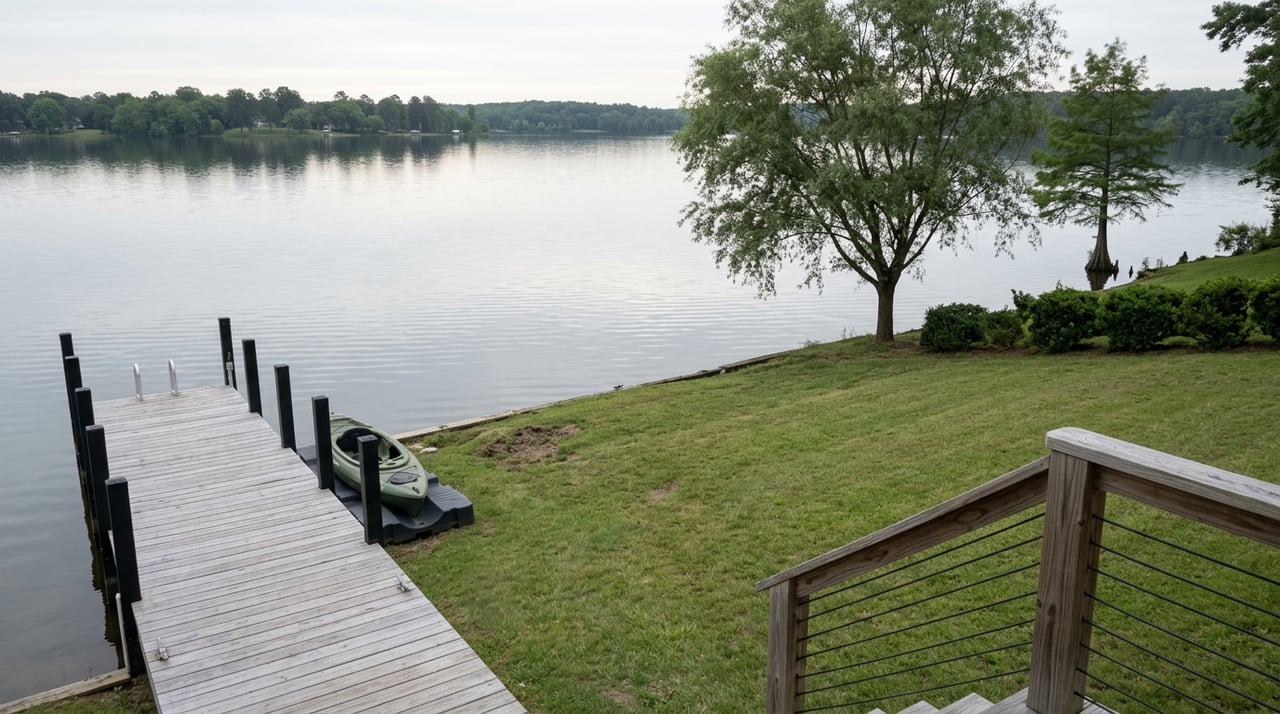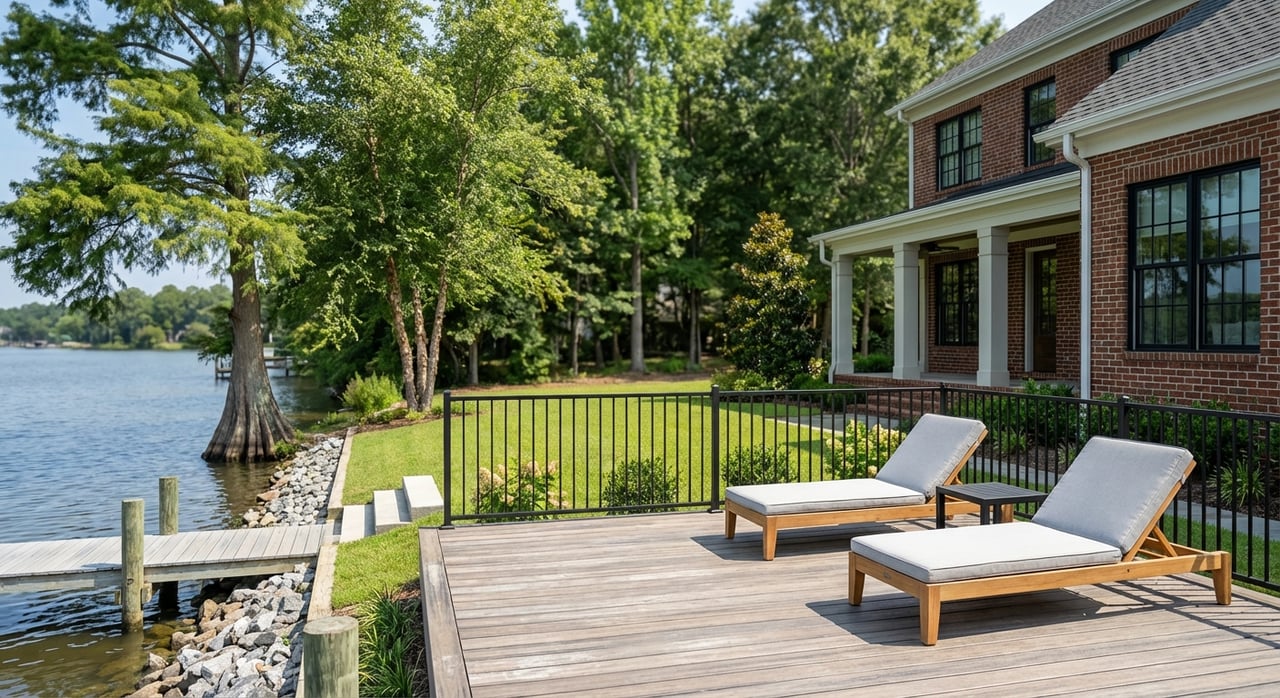
Picture your morning coffee with glassy water in view and a boat waiting at your dock. If you are exploring homes along the Coosa River in Gadsden, you want the lifestyle and the value to line up. The good news is you can find both here, but waterfront due diligence is different from a typical in-town home. In this guide, you will learn how the river and Neely Henry Lake operate, what permits and insurance to check, and the steps to take before you tour or write an offer. Let’s dive in.
Why buy on the Coosa in Gadsden
Neely Henry Lake is a storage reservoir managed by Alabama Power. Water levels follow seasonal guides that support power generation and recreation. You can review level guidance and lake updates on Alabama Power’s Neely Henry Lake page.
Gadsden’s riverfront is active and convenient for boaters. The City maintains public amenities such as Coosa Landing, ramps, and boardwalks, so you will see both public and private access along the same corridor. You can confirm launch locations and marina details on the City of Gadsden’s Parks and Recreation page.
What you will find: property types and features
Along the Coosa in Gadsden, you will typically see:
- True waterfront lots with private shoreline.
- Peninsula lots with extended frontage.
- Single-family homes with private docks, boat lifts, or boathouses.
- Vacant lots for custom builds.
- Neighborhoods with shared or HOA dock access.
When you tour, inspect features that drive value and usability:
- Dock, lift, and pier condition, including electrical service and lighting.
- Water depth at the dock and in the cove, and whether that depth is reliable year round.
- Shoreline stabilization such as riprap or seawalls, and its condition.
- Driveway and trailer parking, plus turnarounds.
- Sewer connection vs. private septic system.
Many sellers highlight a dock or boathouse as a headline feature. Ask for the permit documents and whether they transfer with title.
Boating access and lake operations
Public ramps and Coosa Landing make boating accessible even if you do not have a private slip. During tournament weekends and holidays, expect heavier ramp traffic and plan accordingly. You can confirm hours and locations through the City’s Parks and Recreation resources.
Because Neely Henry is a managed reservoir, water levels shift with the operating guide. Summer pool, winter drawdown, and flood response can change the distance from your dock to the water, influence when you can perform shoreline work, and affect temporary access in shallow coves. Alabama Power explains seasonal operations and recommends planning shoreline projects during drawdowns on its shorelines site.
Permits and shoreline rules you must verify
Before you buy, verify what you can build, repair, or replace on the shoreline:
Alabama Power Shorelines administers a lakeshore-use permit program for docks, boathouses, walkways, riprap, and similar work within its flood easement or control strip. Smaller lots can face structure-size limits. Always request copies of any existing permits and a builder’s copy, and verify whether they transfer with the sale. Learn the basics on Alabama Power’s permits page.
The U.S. Army Corps of Engineers regulates structures and dredging in navigable waters. Many common projects on Alabama Power lakes are covered by Programmatic General Permits if they meet the conditions. Larger work can trigger joint state and federal review. Review permit pathways on USACE’s Regulatory Program page.
Practical tip: a visible dock is not proof that you can rebuild it the same way after storm damage. Confirm the record permits, who holds them, and transfer rules through Alabama Power Shorelines.
Flood risk and insurance planning
Lenders use FEMA maps to determine if a structure sits in a Special Flood Hazard Area. If it does, flood insurance is typically required by federally regulated lenders. Even outside high-risk zones, flood insurance is worth considering because claims often happen in moderate risk areas. Start with an address search on the FEMA Flood Map Service Center and, if needed, obtain an elevation certificate from a licensed surveyor.
Standard homeowners policies usually exclude flood. Coverage is available through the National Flood Insurance Program and private carriers. Premiums depend on factors such as zone and elevation relative to the base flood elevation, along with property-specific risk factors. Shop quotes early so you can factor premiums into your monthly budget and loan approval.
Local environmental questions to ask
There is an active local conversation about coal ash at the former Plant Gadsden site near Neely Henry Lake. Advocacy groups and environmental lawyers have raised concerns about groundwater monitoring and potential risks to downstream intakes. Read a summary of the issue in SELC’s press release on the Gadsden coal ash site and track local advocacy at Coosa Riverkeeper’s page.
For confidence and resale strength, request recent water-quality information such as utility Consumer Confidence Reports and ask the seller for any environmental testing or disclosures related to the property.
How waterfront affects price and competition
Waterfront homes often command a premium, but the size of that premium varies by market and property specifics. In Gadsden, overall prices are lower than many coastal or resort markets, so you can sometimes find riverfront at approachable prices. That said, scarcity of true private frontage, permitted dock status, year round depth, and condition can create meaningful premiums for the best lots.
Treat any national premium statistic as directional. For an accurate number on a specific property, use current MLS waterfront comps and, if needed, an appraiser experienced with reservoir homes.
Buyer due diligence checklist
Work through this list before you tour or as soon as you go under contract:
- Confirm exact lot lines and riparian rights with a recent survey or ALTA map. Ask the seller for the recorded deed and any Alabama Power dock license or easement. Start with Alabama Power’s permit guidance.
- Check the parcel on the FEMA Flood Map Service Center. If flood status is unclear, order an elevation certificate and ask your lender to run a formal flood determination early.
- Request copies of all Alabama Power Shorelines permits, builder’s copies, and any correspondence. If no permit exists, ask what is likely approvable and on what timeline through APC Shorelines.
- Confirm whether past or planned shoreline work requires federal or state authorization. Review pathways and conditions on USACE’s permit page.
- If the property uses septic, order a septic inspection and review Alabama onsite-sewage rules. A reference source is the Alabama Administrative Code hosted by Cornell Law School’s Legal Information Institute at law.cornell.edu.
- Get an independent dock and electrical inspection, and a written estimate for repairs or replacement. Alabama Power notes shoreline work is often best scheduled during drawdown periods. See permit guidance.
- Request recent water-quality records and disclosures. You can review the broader local issue via SELC’s summary and Coosa Riverkeeper.
- If applicable, obtain HOA or marina documents that govern slip rights, fees, and transfer rules.
- Shop homeowners and flood insurance quotes early. Premiums and coverage requirements can affect affordability and closing timelines.
- Use a lender and appraiser with recent waterfront experience. Proper comps and valuation methods matter for reservoir homes.
Touring tips and offer strategy
- Time your visit. Touring during a seasonal drawdown can reveal shoreline conditions and cove depth you might miss at summer pool. Alabama Power outlines seasonal operations on the Neely Henry page.
- Measure access. Walk from the house to the shoreline and imagine hauling gear. Check trailer parking and turnarounds.
- Ask for documentation up front. Collect dock permits, surveys, and utility info before you set price expectations.
- Budget for maintenance. Docks, lifts, shoreline stabilization, and vegetation management can add recurring costs. Build a reserve so repairs are not a surprise.
- Protect your timeline. If permits or insurance are uncertain, include appropriate contingencies and order key inspections early.
Ready to get eyes on the right properties and navigate permits with confidence? Connect with Scott Hindsman for local guidance, curated waterfront options, and a clear plan from tour to closing.
FAQs
What permits do I need for a new dock on Neely Henry in Gadsden?
- Most docks, boathouses, walkways, and shoreline stabilization require Alabama Power Shorelines approval, and some projects also need U.S. Army Corps of Engineers authorization if they extend into navigable waters. Request existing permits and confirm transfer rules before you buy.
How do seasonal lake levels affect a Gadsden waterfront home?
- Neely Henry is a managed reservoir with summer pool and winter drawdown. Changing levels can affect dock height, temporary boat access in shallow coves, and the best timing for shoreline work.
Do I need flood insurance for a Coosa River property?
- If your structure is in a FEMA Special Flood Hazard Area, a lender will usually require flood insurance. Even outside high-risk zones, consider a policy because many claims occur in moderate risk areas.
Are there environmental concerns near the Coosa River in Gadsden?
- Local advocacy groups have highlighted coal ash concerns at a former plant site near Neely Henry Lake. Review public reports, ask for seller disclosures, and consult recent utility water-quality reports.
Can I rebuild a storm-damaged dock the same size and style?
- Not automatically. A visible dock does not guarantee you can replace it as-is. You need to confirm existing Alabama Power permits, authorization type, and whether approvals transfer with title before planning any rebuild.